Special Use Permit Application Overview
As part of the Wayland Township permitting process, Apex Clean Energy submitted a Special Use Permit (SUP) application for the Blazing Star Solar project in January 2026. This application is reviewed by Wayland Township and includes detailed information about how the project is designed, how it would operate, and how it would fit into the surrounding area.
A full SUP application typically includes materials such as:
- General narrative of how local rules and regulations are being met
- A detailed site plan
- Visual simulations
- Groundcover and landscaping plans
- Economic benefits analysis
- Emergency response plans
While the complete application is submitted directly to the Township for formal review, we are sharing the portions that community members most often ask about below.
Application Narrative
The proposed Blazing Star Solar project would be a 125-megawatt (MW) solar facility located within Wayland Township. This document details how the project, as designed, meets all requirements in the Wayland Township Zoning Ordinance for approval of a solar energy system.
Site Overview
The site layout reflects required setbacks, access roads, stormwater features, and internal fencing. Solar panels are arranged to follow the natural contours of the land where possible, with spacing designed to allow for maintenance access and emergency response.
This overview is meant to show how the project fits together at a high level and how the different components are organized across the site. As designed, all Solar Energy System components are sited a minimum of 300 feet from non-participating residents.

Visual Simulations
Visual simulations are included to help show what the project would look like from select viewpoints around the area.
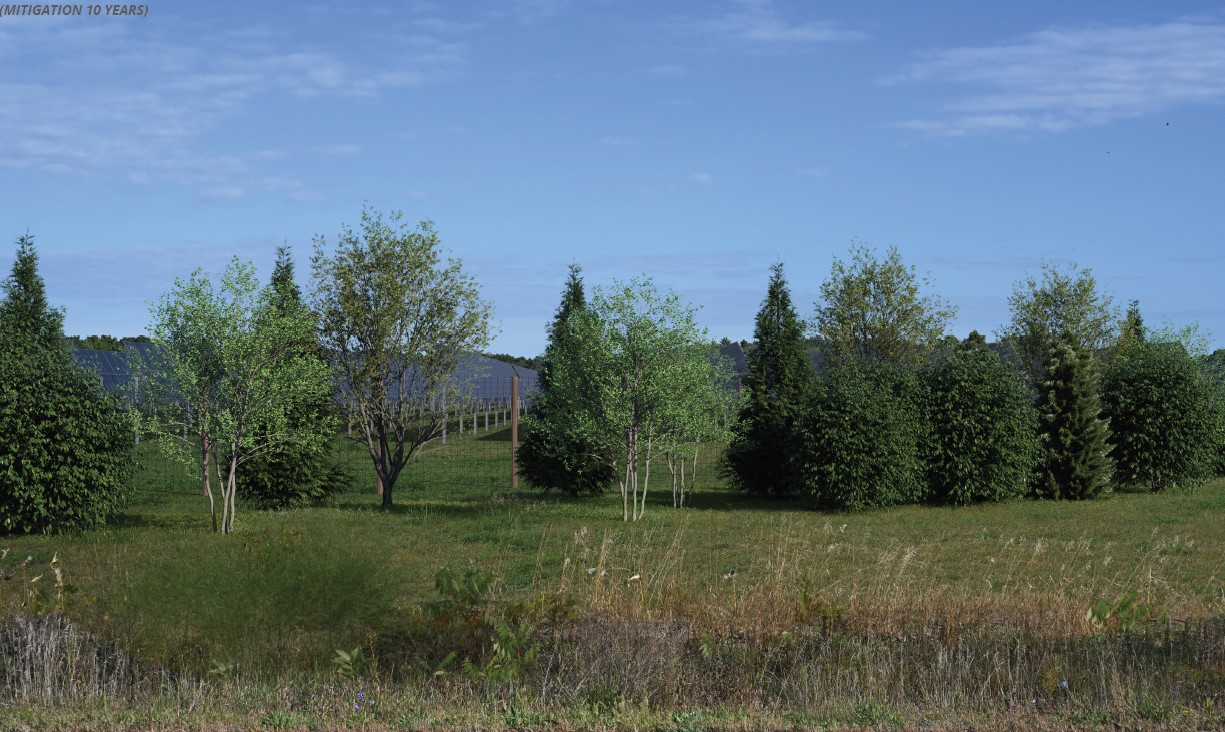
These images are created using site-specific locations and scale-accurate project components. They are intended to provide a realistic representation of how the solar facility and vegetative screening would appear over time, including views that reflect more mature plant growth.
Visual simulations are one tool used alongside site plans and screening designs to give a clearer picture of how the project fits into its surroundings.
What the Screening Looks Like Over Time
- At installation: Plantings are smaller and spaced to allow for healthy growth. Screening is present but still developing.
- After 5 years: Trees and shrubs have filled in significantly, providing noticeable visual buffering and seasonal variation.
- After 10 years: Vegetation reaches a mature appearance, creating a continuous, natural screen that blends into the surrounding landscape.
View the complete booklet of visual simulations by clicking here.
Vegetative Screening Plan
Vegetative screening is included to provide visual buffering around the project where appropriate. The Blazing Star Solar plan uses native trees and shrubs selected for their durability, growth patterns, and long-term appearance.

Vegetation Management Plan
Another common question is what will be planted underneath the solar panels. Blazing Star solar will plant native and non-invasive grasses as well as flowering plants to create pollinator-friendly wildlife habitat throughout the project. The groundcover will meet or exceed a score of 76 on the Michigan State University Extension's Pollinator Habitat Planning Scorecard for Solar Sites.
The full vegetation management plan can be found here.
Property Tax Analysis
The Blazing Star Solar Project will provide long-term economic value for Wayland Township, Allegan County, and local schools. An independent property tax analysis shows the project is expected to generate more than $24.6 million in total property tax revenue over its 30-year life.
Learn more about the project's community benefits here.
Emergency Action Plan
Safety planning is a required part of the Special Use Permit process. The Blazing Star Solar Emergency Action Plan outlines how the project would be monitored and how emergency situations would be handled if they were ever to occur.
As part of developing this plan, our team has met directly with the local fire department to walk through the site design, access points, equipment layout, and response procedures. The plan addresses:
- Site access for emergency vehicles
- Communication protocols
- On-site safety equipment and controls
- Coordination with local emergency responders
This document is designed to support local responders with clear, practical information and to align with existing emergency response practices.